

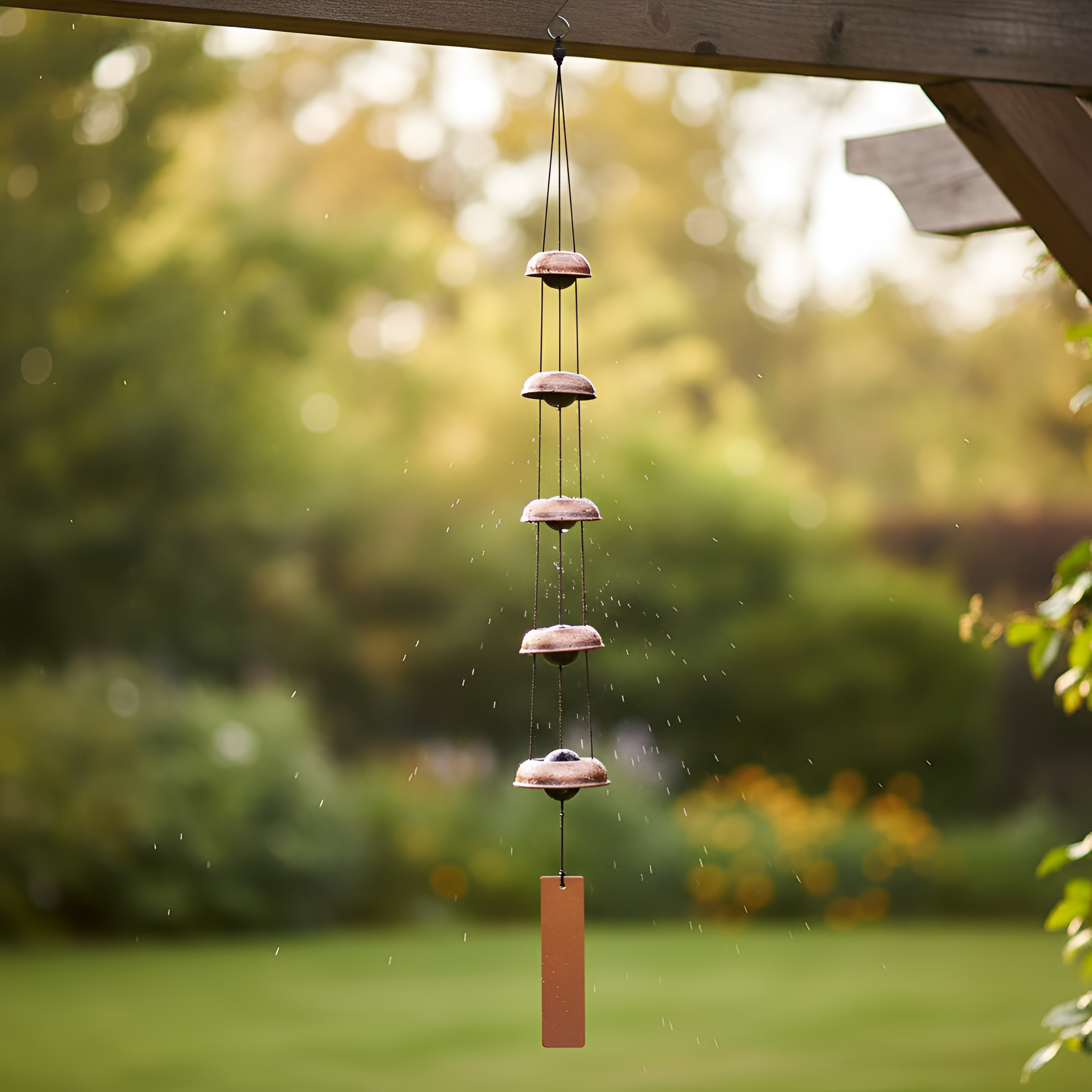
Quick answer: Hang chimes where air actually moves but storms don't hit hardest — a covered eave, porch corner, or open branch rather than a fully enclosed nook. Dust with a dry cloth regularly, use a damp cloth for deeper cleaning, skip harsh chemicals, move chimes to a covered spot before heavy rain, and bring them in during the worst of winter — straight from our own chime listings.
A wind chime asks for very little, but the little it asks for is worth doing right. This guide covers placement logic and pulls the actual seasonal care instructions from two of our own chimes, the Pagoda Style and the Melodic Zen, so you're working from real guidance, not guesswork.
Placement: enough air, not too much storm
A chime needs moving air to do its job, so tucking it into the most sheltered corner of the porch often backfires — too little breeze reaches it and it sits silent. Better spots have a real air corridor: an open eave, a pergola crossbeam, a porch corner where wind funnels around the house, or a sturdy branch. Full exposure on an unprotected pole invites the hardest gusts and direct rain, so the sweet spot is partial shelter — covered overhead, open to the sides.
Hanging hardware, kept simple
Most of our chimes ship with a hanging loop or hook built in, so the decision is just what to hook it to. A plant hook in a joist, an S-hook over a railing, or a secure loop of cord around a branch all work — the goal is a fixed point that won't loosen over a season of wind. Leave clearance on all sides so tubes or cups can swing freely without knocking a wall or post.
Everyday care: what the listings actually say
We pulled the published care instructions from two chime styles, consistent with each other and worth following regardless of which one you own:
| Care step | Pagoda Style Wind Chimes | Melodic Zen Wind Chimes |
|---|---|---|
| Routine dusting | Wipe gently with a soft, dry cloth | Wipe wood and metal parts gently with a dry cloth |
| Deeper cleaning | Lightly damp cloth, then dry fully | Not specified beyond dry-cloth wiping |
| Chemicals | Avoid harsh cleaning chemicals | Avoid harsh chemicals or water-soaking |
| Heavy rain | Hang in a covered area if expecting frequent heavy rain | Hang in covered or shaded areas for longer lifespan |
| Hardware check | Check hanging cord and top loop occasionally | Not specified |
| Extreme weather | Store indoors during extreme weather seasons when possible | Bring indoors during extreme weather for added protection |
The overlap is the takeaway: dry-cloth dusting by default, a damp cloth (never harsh chemicals) when it needs more, cover before sustained heavy rain, and indoors during the worst of the season.
Spring and summer: the easy season
Warm months are mostly maintenance-free. Rinse dust and pollen off with a dry or lightly damp cloth every few weeks, especially after a dry spell kicks up debris. It's also the easiest time to check hardware — glance at the cord and top loop while dusting, since a small fray is easier to fix in July than mid-storm in October.
Storm season: move it before the front arrives
Both listings flag frequent heavy rain as the trigger for moving a chime to cover. Treat that as a forecast decision, not a during-the-storm scramble: relocate metal-and-wood chimes before a multi-day rain stretch. A single passing shower isn't a concern — it's sustained, repeated soaking that shortens a finish's life.
Winter: when "extreme weather" applies
Both listings recommend bringing chimes indoors during extreme weather. What counts as extreme depends on your climate — a mild coastal winter might never trigger it, while hard freezes, ice storms, or heavy snow are the scenario the instructions are written for. If unsure, store wood-and-metal chimes in a garage or shed once temperatures are reliably below freezing.
A seasonal checklist
- Spring: dust off winter grime, inspect the cord and hook, rehang if stored.
- Summer: routine dry-cloth dusting; damp cloth after pollen-heavy stretches.
- Fall: watch for sustained heavy rain and relocate ahead of it, not during.
- Winter: bring wood-and-metal chimes in once weather turns genuinely extreme.
Frequently asked questions
Where is the best place to hang a wind chime?
Somewhere with real airflow but not full storm exposure - an open eave, a porch corner, a pergola beam, or a sturdy branch. Give it enough clearance on all sides to swing freely without hitting a wall or post.
How often should I clean a wind chime?
A quick wipe with a soft, dry cloth on a routine basis is enough for both the Pagoda and Melodic Zen chimes per their listings. For a deeper clean, a lightly damp cloth works - just avoid harsh chemicals and dry the chime fully afterward.
Do wind chimes need to come inside for winter?
Both chime listings we checked recommend bringing them indoors during extreme weather. What counts as extreme depends on your climate - a run of hard freezes or heavy snow is the clearest signal to bring wood-and-metal chimes in.
Should I move my chime before or during a storm?
Before, if you can. Both listings call out frequent heavy rain as a reason to relocate to a covered area - treating an incoming multi-day rain forecast as the cue is easier than reacting once the storm has already started.
What should I check on the hanging hardware?
The hanging cord and top loop, checked occasionally per the Pagoda listing. A quick look during routine dusting is enough to catch fraying or wear before it becomes a problem.
More from the Solar Wind LED Chime blog
- Solar wind chimes — how they work and which style suits your space
- 2 Pcs Symphonic Wind Chimes — a closer look at the $19.99 pair
- Memorial wind chimes — a thoughtful sympathy gift guide
- Shop metal, wooden & classic chimes
Care guidance above is drawn from the published care instructions for the Pagoda Style and Melodic Zen wind chimes; general placement advice is offered as a sensible starting point, not a manufacturer specification. Prices and specifications are current as of publication and may change — see each product page for the latest details.