
Quick answer: Yes, solar lights work in winter — panels charge in cold weather and outdoor-rated housings handle snow and rain. But shorter, grayer days bank a smaller charge, meaning a dimmer or shorter glow that night. Expect reduced runtime from November to February, keep panels clear, and nothing is broken.
The most common solar lighting question we get isn't about brightness or colors — it's some version of "will these die in winter?" The honest answer: the hardware is fine in winter, but performance will noticeably drop anyway. This post explains why, what our listings promise, and the habits that recover real December runtime.
Why winter is genuinely harder for solar
Three things stack against a solar panel in winter, none of them faults. Daylight shrinks — a June day offers roughly 14–15 hours of light in much of the US, a December day 9–10 — so the charging window loses a third before weather even enters it. The sun also rides lower, casting shallower light and longer shadows across spots that were sunny all summer, and winter skies run cloudier in most climates. Cold itself isn't the problem — cells operate fine in the cold; the battery just holds slightly less charge on freezing nights.
The one-sentence physics
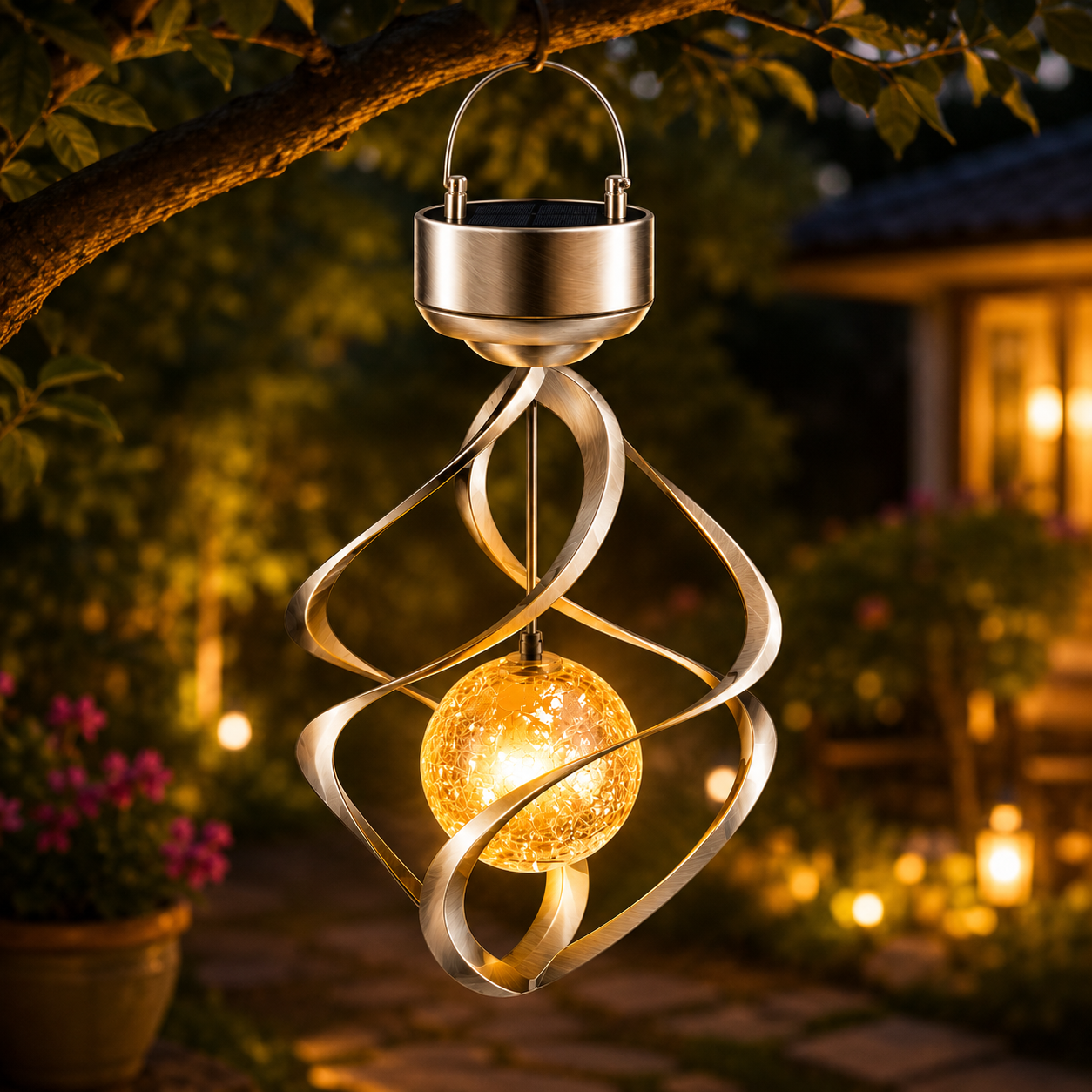
A solar light spends at night only what its panel earned that day. Every listed runtime assumes a full charge: our color-changing chime lists 8–12 hours, our pathway lights 10–12 after 6–8 hours of direct sun. Halve the input and something gives — hours of glow, brightness, or both. The Dual Mode post cap listing describes it well: steady output through dusk and early evening, then a gradual dim as power runs down. In winter, "early evening" arrives sooner.
What our listings promise — and don't
| Product | Winter-relevant listing language |
|---|---|
| Color-changing chime | Built for year-round use; 8–12h is the full-charge figure |
| Pathway lights (10-pack) | IP65, all-season; keep panels clear in rain and snow |
| Motion lights (puck & 3-head) | IP65, rated for rain, snow, and temperature swings |
| Balloon lantern | Waterproof (listed IP6); indoor storage in extreme winter, optional |
| Post cap lights | Sealed against rain and moisture; built for seasonal transitions |
Notice what's absent: none of these listings claims full summer runtime in January, and neither will we. Weatherproofing promises survival, not immunity to shorter days.
Habits that actually help
- Brush snow off panels. A snowed-over panel charges near zero; a glove restores the day's income. Same logic for leaf-fall and grime.
- Re-audit your spots in December. Winter sun is lower, so a spot that charged fine in July may now sit in shadow all day.
- Prefer motion modes over constant glow. Sensor mode on the 3-head security light spends the smaller winter charge only when something moves.
- Store decorative pieces if you like. The balloon lantern allows indoor storage in extreme winter; charge pathway lights fully before long storage.
- Suspect the battery in year two-plus. Pathway lights use replaceable AAA rechargeables, refreshed every 12–18 months.
Setting expectations by product type
Security lights fare best in winter, since motion modes are frugal by design — a night's charge goes further when the light only fires on demand. Perimeter lights like post caps still mark the fence line but dim earlier than in July. Decorative pieces — the chime, the balloon lantern — are most visibly affected, since their job is hours of continuous glow. A reasonable mindset: security stays functional, decoration becomes an early-evening pleasure rather than an all-nighter.
Spring fixes everything
The satisfying part of solar seasonality is that it reverses on its own. As days stretch past equinox, charge windows widen and the same untouched lights drift back toward their listed figures. If a light stays weak into sunny May — panel clean, spot sunny — that's a tired battery or a faulty unit, not a season, and the point to check our refund policy page or swap the cell on models that allow it.
Frequently asked questions
Do solar lights work in winter at all?
Yes. Panels charge in cold weather - cold is actually fine for solar cells - and the outdoor-rated housings on our lights are built for rain and snow. The reduction you notice comes from shorter, grayer days, not the temperature.
Should I bring solar lights inside for winter?
Usually no - outdoor-rated lights are made to stay out. Some listings offer indoor storage as an option for decorative pieces, like the balloon lantern in extreme conditions. If you store anything long-term, charge it fully first and keep it dry.
Why is my solar light dim after a few cloudy days?
Because runtime follows the day's charge. Overcast light charges the battery only partially, so the light runs dimmer or switches off earlier. It recovers on the next run of sunny days without any intervention.
Does snow damage solar lights?
Snow sitting on a panel mostly just blocks charging - brush it off and the light resumes earning. The sealed IP65-class housings on our outdoor lights are rated for snow and rain exposure.
Will my lights return to normal in spring?
Yes - as days lengthen and the sun climbs, charging improves and runtimes drift back toward listed figures on their own. A light that stays weak in full spring sun likely needs a battery refresh instead.
More from the Solar Wind LED Chime blog
- How solar garden lights work: panel, battery, and sensor
- The Solar Hot Air Balloon Lantern, up close
- Our best-selling solar lights and wind chimes of 2026
- Shop the solar collection
Runtime and weather-rating figures are the manufacturers' listed specs; real-world winter performance varies with climate, placement, and battery age. Daylight-hours figures are approximate and vary by latitude. Prices and specifications are current as of publication and may change.